Theme
“The Palestinians all think the same. / Everyone supports the resistance.”
Palestinian public opinion is read off the loudest voices and official bodies, as if dissent didn't exist.
Why people find it convincing
- Polls show real majorities for positions many find alarming (e.g. PCPSR December 2023: 72% called the October 7 decision 'correct').
- Few Palestinian voices publicly contradict Hamas or the PA line.
- Every proposed solution has Jewish supporters who say so openly; the Palestinian side looks uniform by comparison.
The picture
The asymmetry: dissent costs far more on one side.
Israelis and Jews can argue any position in public, at most at social cost — every solution, including the extreme ones, has open Jewish supporters. Palestinians who depart from the line face much higher prices: Hamas has repeatedly executed alleged 'collaborators', sometimes publicly; the critic Nizar Banat died in Palestinian Authority custody in June 2021 after being beaten during his arrest; anti-normalisation branding turns contact with Israelis into treason (see 'purity-loop'). The pattern is old: a 1947 NYT report quoted charges of 'internal terror against Arab opponents of the Mufti and Arabs who sell land to the Jews'. Verify each case before publishing.
newspaper'Mufti Called Axis Partner' (1947) ✓
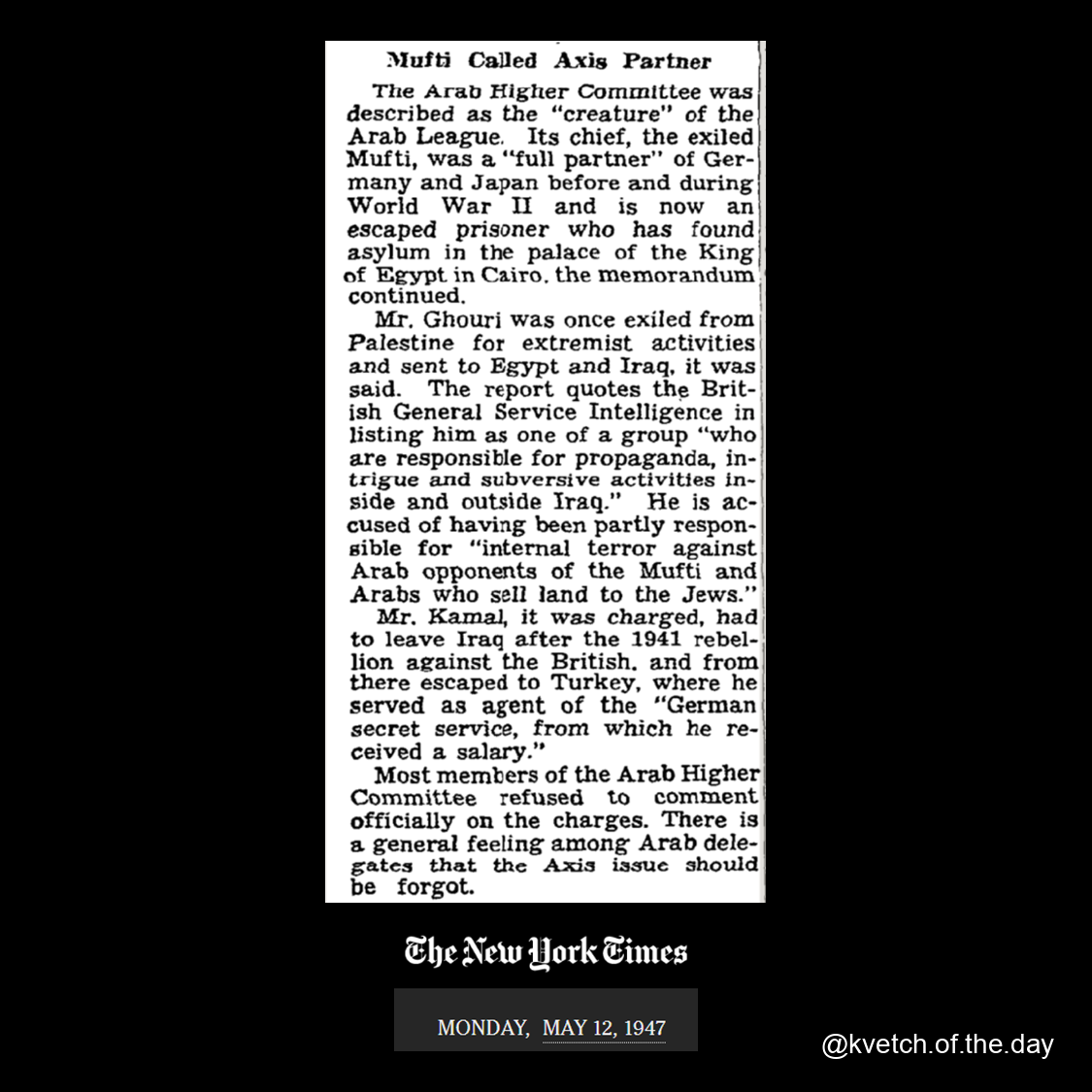
Scan from the kvetch-of-the-day news archive.
NYT 1947-05-12; vision-verified. Reports the charges of a memorandum (an advocacy source) against the Arab Higher Committee.
What it means for reading opinion.
Public silence under that pressure is not the same as agreement. Anonymous polling hints at a wider range — e.g. East Jerusalem polls showing a substantial share preferring Israeli citizenship, and PCPSR series in which support for positions moves with events. Dissenting Palestinians do speak — often at great cost, and often called 'Zionists' for it. When you only hear one Palestinian voice, ask who can afford to speak.
Where this argument points
Followed through, this argument is used to support: